
September 2026
Private Security’s Wage Dilemma
A recent New York Times article highlighted the risks security professionals face every day. Here’s our take, and some ideas for how the industry can do better..
New York Time Article found here
Everyone agrees the security officer’s role has changed.
Today’s officers are expected to respond to workplace violence, de-escalate conflicts, operate sophisticated technologies, protect critical infrastructure, and serve as the first line of defense during emergencies.
However, the article takes a complex situation and applies a superficial understanding to it. The question isn’t whether officers deserve higher wages.
The question is: Who pays for it?
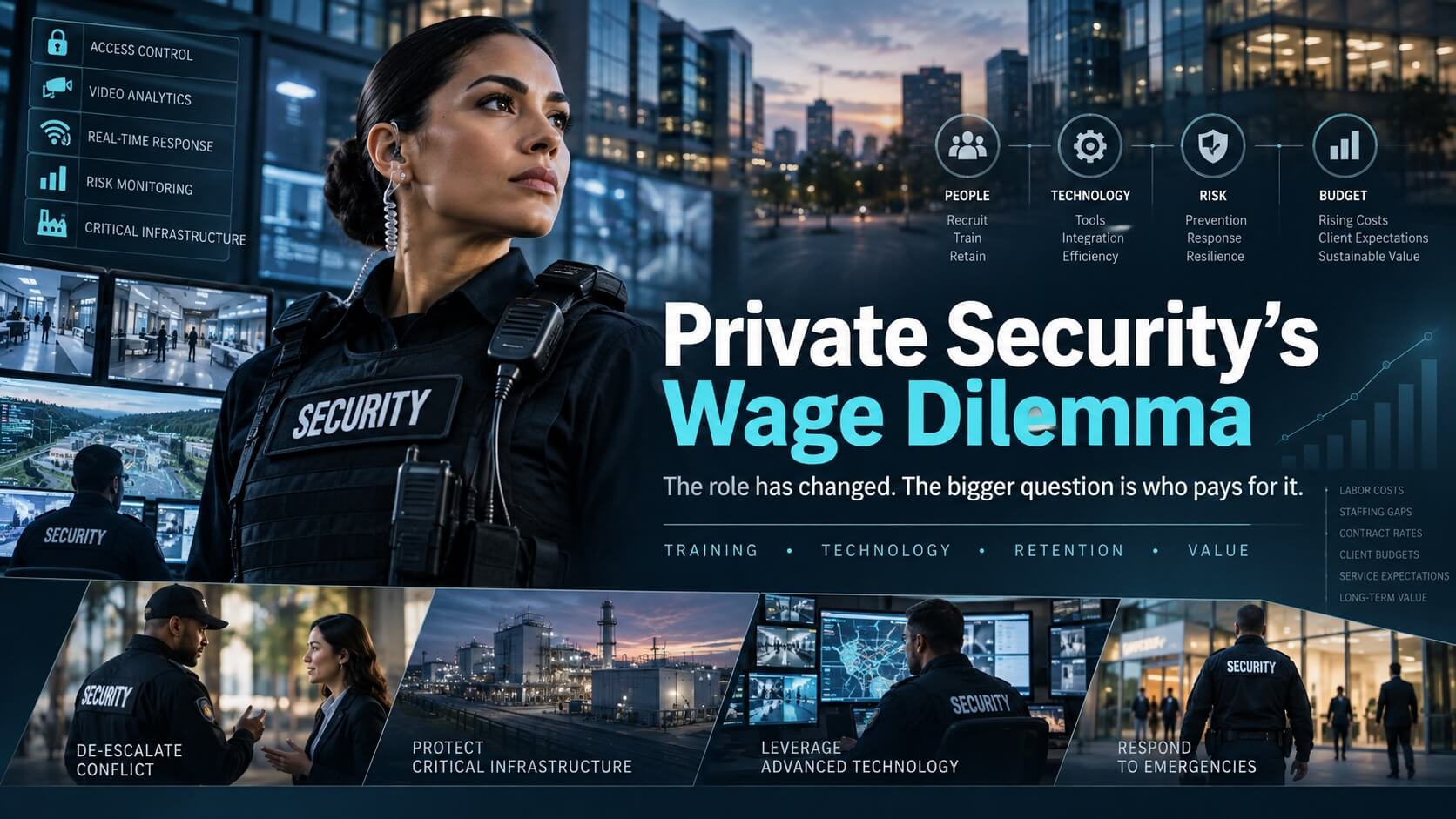
Many buyers don’t specify a market wage or require their suppliers to disclose it. Often, contracts are awarded with too much focus on bill rate and not enough on the components of that rate, of which wages are by far the largest. Contracts were won and lost over pennies per hour. Yet clients increasingly expect a more professional, better-trained and more reliable workforce.
Something has to give.
Security companies cannot absorb unlimited wage increases while maintaining sufficient margins to operate effectively. At the same time, high turnover, staffing shortages and inconsistent service create risks for clients.
The firms that thrive over the next decade will likely combine three strategies:
- Invest in training and career development to improve retention.
- Use technology to make officers more productive and effective.
- Shift client conversations away from hourly rates and toward outcomes, risk reduction, and value.
The future may belong to companies that sell expertise, professionalism and measurable results.
What do you think is the biggest obstacle to improving compensation in private security: client budgets, industry pricing pressure, labor shortages? Or something else?